How I Think About Systems
Three principles that carry across every project I build.
From field installations to hardware-free mechanisms.
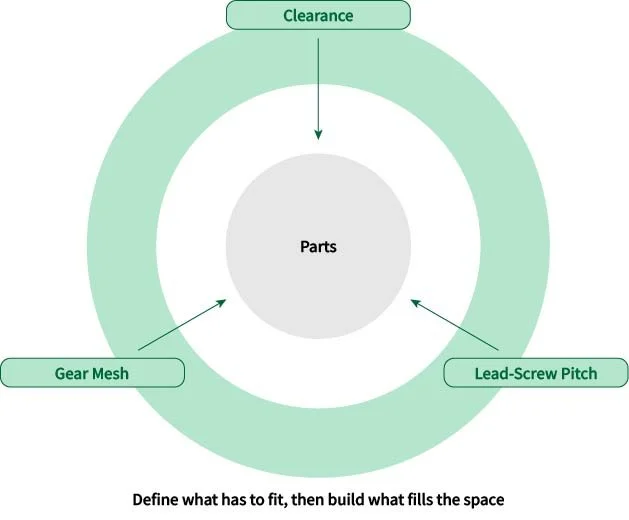
Hardware-free design starts with tolerance, not parts.
Blooming runs on 15 synchronized gears with no fasteners. That only works because tolerance came first. Clearances, gear mesh, and lead-screw pitch were defined before the first part was printed. I design from the constraints inward: define what has to fit, then build what fills the space.
Design isn’t done until it can be built.
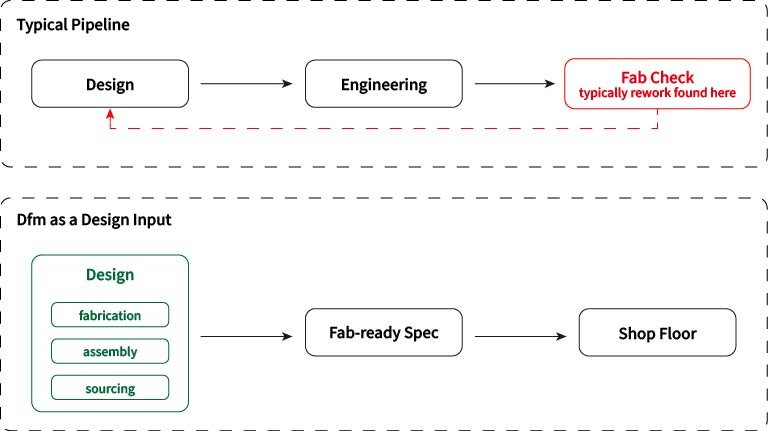
I treat manufacturability as a design input, not a downstream check.I evaluate every specification against how it will be fabricated, assembled, and sourced—before it leaves my desk. At LA ProPoint, this meant translating design intent into fabrication-ready specifications that held up on the shop floor, not just the rendering.
A spreadsheet isn’t data. It’s operational logic.
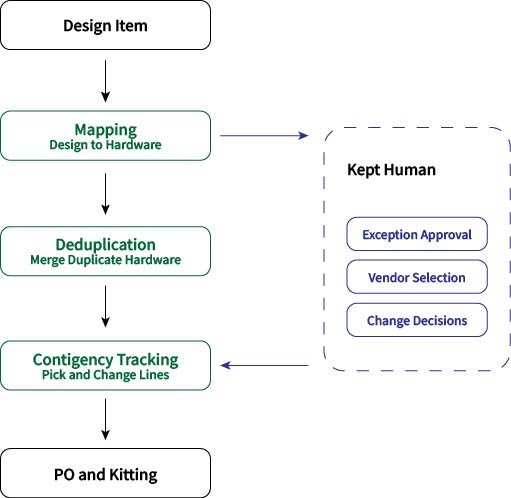
The procurement system I built at LA ProPoint wasn’t just a faster way to enter data. It encoded the decision logic of purchasing and assembly, including design-to-hardware mapping, deduplication, inventory tracking, and automatic recalculation. Good systems design is not about removing work. It is about deciding which decisions to encode and which to leave to human judgment.
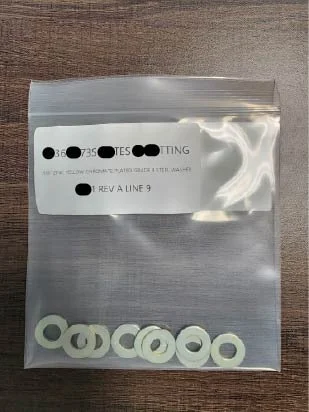
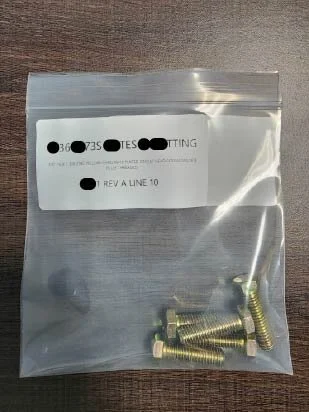
Each bag carries the design number, revision, BOM line, and part name.
Copied verbatim from the design, even where the design's name differs from the manufacturer's.
Installers pull by what the drawing says, not what the catalog calls it.